


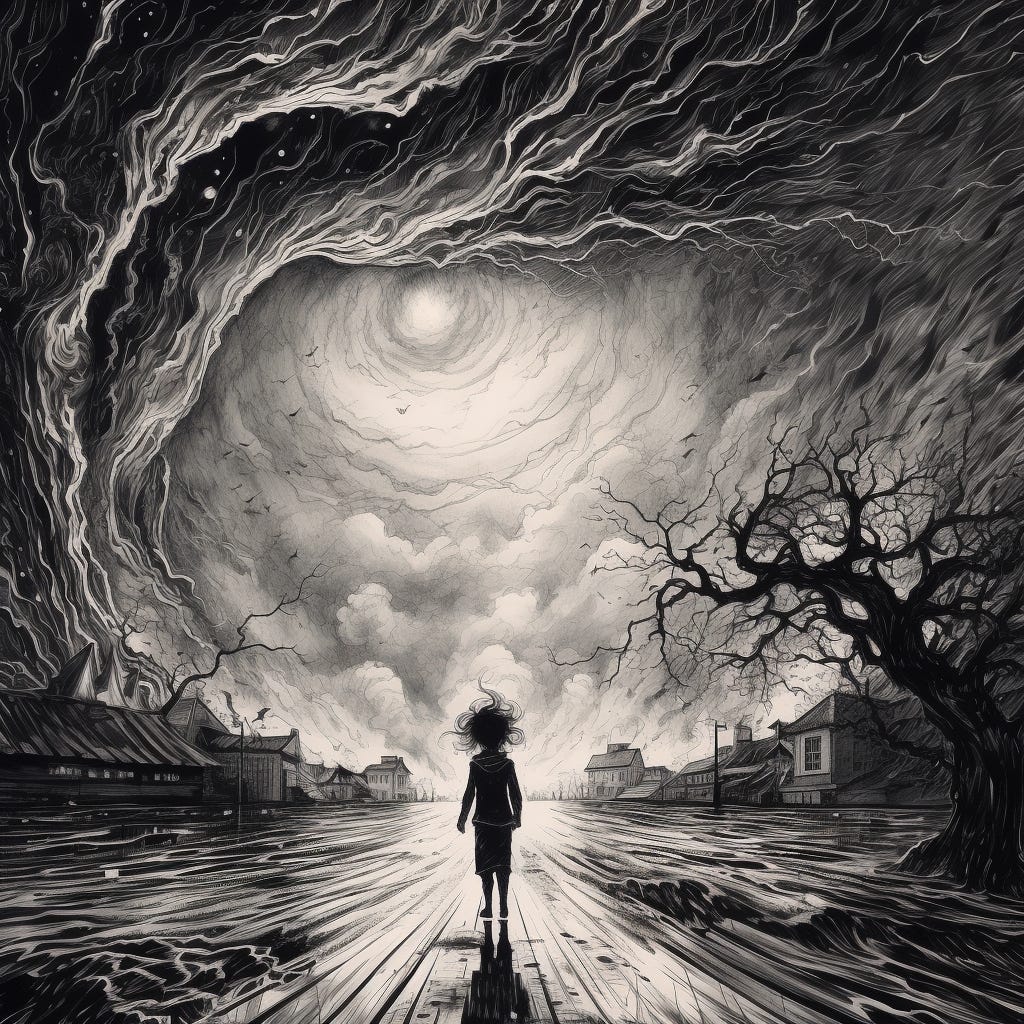
When I am silent, I have thunder inside. - Rumi
Roland Barthes, in his seminal work Camera Lucida, delves into the nature and essence of photography, offering a profound insight into how photographs are perceived and understood: "A photograph is always invisible: it is not it that we see." He is speaking to the idea that the essence of a photograph lies not in its physical form or the literal image it presents, but in the underlying realities, emotions, and memories it evokes in the viewer. The photograph acts as a conduit to a deeper understanding or connection, often beyond the immediate or visible. It is the meaning, the context, and the personal associations that render the photograph invisible in its essence; what we truly "see" is not the image itself, but the layers of significance and emotion that the image brings to the fore.
In an era where the capture and share of moments are instantaneous on social media, the words of Roland Barthes resonate with a profound truth that invites us to delve deeper into what we truly see in any image. Barthes' assertion, challenges us to question our perceptions and understandings of how images operate. This exploration is not just about the aesthetics of photography but about uncovering the invisible essence that lies beneath the surface of any coded piece of data.
How we respond to the traffic of signs, symbols, and codes we imbibe says a great deal about who we are. Therein lies the paradox of perception: we all experience the same reality but perceive it differently.
At first glance, images present us with a visual representation of reality. They capture moments, landscapes, people, and emotions, frozen in time. However, the essence of what Barthes articulates goes beyond the visible. The invisible element of an image is its ability to evoke memories, stir emotions, and transport the viewer to a different time and place. It is in this invisible realm that the image holds its true power and significance.
The same is true for stories. Stories have the unique ability to connect with viewers on an emotional level. A single story can evoke a sense of nostalgia, longing, happiness, or even grief. This emotional resonance unveils hidden storms inside all of us. The flood of emotions and memories that a story unleashes within is what we respond to. A story can unlock something deeply personal and often unspoken.
In a world saturated with visual content and narratives, the challenge lies not only in deciphering the visible but in unraveling the invisible layers that shape our perceptions and emotions. This is where the magic happens. This is where story operates as medicine, helping us metabolize the meaning of our complex lives. Each image, each story functions as a mirror reflecting different facets of our inner worlds. Ultimately, it is in the invisible spaces where we discover the true depth and resonance of art and expression.
The power of unseen spaces is a theme that emerged from The Fragile Real study that I intend to further explore. More specifically in The Evolution of Impact I wrote about actions that take place “behind closed doors.” There is a great deal of power to unlock when the gaze shifts to the dark. Going dark can drain domination of its power. Choosing not to participate until the terms make sense has been employed as a tactic of liberation for hundreds of years. But that is for a future post so I will stop here. Let’s just say that sometimes, when we use the word “invisible” we need to consider to who?
Digging deeper to find the hidden meaning of stories is what I love about making films and television shows. Storytellers around the world mine this dimension with vast skill to capture the complexities of the human experience. In my native country, the Ethiopian tradition of Sem'na Worq (ሰምና ወርቅ), which literally translates to "wax and gold," refers to a form of poetic and linguistic expression that operates on two levels: the "wax" (ምልክት), which is the overt, literal, or surface meaning, and the "gold" (ወርቅ)), which is the hidden, deeper, or symbolic meaning beneath the surface.
This dual-layered approach to communication is not just a literary device but also a way of understanding the world, reflecting the Ethiopian cultural emphasis on indirectness, subtlety, and depth. In literature, it manifests in poetry and religious texts, where the apparent narrative or message (the "wax") often conceals a more profound spiritual or philosophical insight (the "gold"). In everyday conversation, it might be seen in the use of proverbs, allusions, and metaphors that convey meanings beyond their literal interpretation.
The tradition of "wax and gold" emphasizes the listener or reader's role in discerning the deeper meaning, encouraging a form of engagement that goes beyond the surface. It reflects a broader worldview that values the unseen and the unsaid, suggesting that truth and meaning are multi-layered and that understanding comes through intuition, insight, and reflection.
What stories surface inside of us is gold. What we choose to do with that gold depends on who we are.